Saturday, 14 February 2015

Video Entry #5 - Modes of Documentary

Whilst learning about documentary, we have been taught about documentary modes. Here are a list of them and explaining what they are with an example.

Observational

Observational is an unobtrusive camera which interacts with everyday subjects. This means the director can observe people's everyday lives without them acting unnatural or playing to the camera. An example: "Metallica: Some Kind of Monster"

Expository

Expository is to create an argument and have a voice over provide the assumptions and the images provide the evidence
Example: Any reputable nature documentary

Participatory

Participatory is where the filmmaker and subject interact. Similar to Performative. 
"The performative mode, the final mode Nichols discusses, is easily confused with the participatory mode, and Nichols remains somewhat nebulous about their distinctions. The crux of the difference seems to lie in the fact that where the participatory mode engages the filmmaker to the story but attempts to construct truths that should be self-evident to anyone, the performative mode engages the filmmaker to the story but constructs subjective truths that are significant to the filmmaker him or herself"
Example: "Exit through the gift shop"

Performative

Similar to what's written above
Example: Any Louis Theroux or Michael Moore documentary

Poetic

Poetic is where a documentary emphasis visual associations, tonal or rhythmic qualities, descriptive passages and formal organisation. These films can be called experimental or avant-garde
Example: "Night and Fog"

Reflexive

Reflexive calls to attention the assumptions and conventions that govern documentary filmmaking. An example of this is the mockumentary format.
Example: "This is Spinal Tap"

Friday, 13 February 2015

Video Entry #4 - Short film: Pockets and ideas

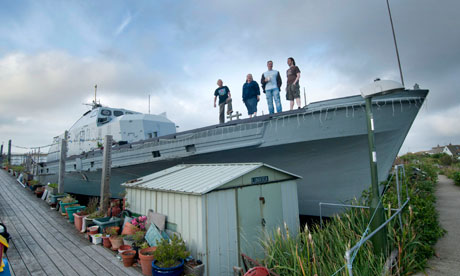
Having watched the short film "Pockets", I have gotten a general idea about what a short film is to be and ideas on what to make my documentary on. An idea I might submit to the class is the photography project of a friend last term in my class. He did his photography project on a group of people who live in house boats by Shoreham-on-sea. They seemed really interesting as they use whatever they can find to make their houses which makes their house a bit wacky and wonderful. For example, I was told one of them used an old WW2 bomb shell as a letterbox. I've attached a couple photos below to show examples of them (that I got from Google):


Wednesday, 11 February 2015

Video Entry #3 - Framing

In our lesson this week, we didn't do any practical. We did the whole lesson of theory. It was quite a bit to take in but I knew a little about it. So, we talked about:

Rule of Thirds


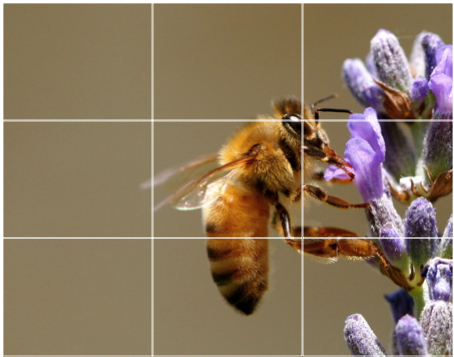
This grid is display to give help to showing where the points of interest need to be. For example, in the image above, it is the bee. The inter-sectional points around the middle square are what our eyes are drawn to and it makes for a more natural viewing. The example given in class was this image:


It can also be used to place the eyeline on the point of interest making him the focus and his focus the secondary focus.

180 Degree Rule

The 180 degree rule is where the cameras must stay in the arc around the actors or person's otherwise if you go on the opposite side without letting the viewer know by a camera shift. This makes again for a more natural viewing of the subject.

The Golden Ratio


This is something to keep in mind whilst filming. It makes an image appear better. I find it hard to explain this as Peter did but I think a photo would explain it better;


The focus is all relative and good, to put in a terrible way.

Matching Eyelines & Matching Cuts

Peter mentioned that whilst filming, we should have the eyelines of all the people we interview should have the same eyelines. So when switching between shots, it feels natural. Same with the cuts.

Natural Transitions

We were told that to make our film better, we could use natural transitions. Natural transitions are when you don't cut to something and take the viewer out of what they were just watching. For example, say you had a shot of a woman entering a building and then panning up the building to the sky and then panning down to reveal the woman and friends coming out of the building. That's a natural transition. 

Dramatic Arc/Curve and Aristotle

 Aristotle was the first to say that a story has a beginning, middle and end, which coincides by using the dramatic arc. The dramatic arc is shown below:


Replacing exposition, climax and denouement with beginning, middle and end respectively. Most films seem to follow this dramatic arc in terms of story telling. However going against can be well done but it is difficult. Eugene Scribe was the first to ask, "why do we have to follow this outline?". So films like Memento have followed Scribe in his way of thinking. 

I don't what dramatic arc our documentary will take. We are still talking and researching about ideas we can do. We talked about maybe interviewing an arts, medical and psychology professor to give us their definition of what a mouth is to them. Hopefully giving us new perspectives that we can feature in our documentary. We also talked about the primal and essential extinct our mouths are used for. For example eating. It was also brought up about, maybe non-essential but our mouths are used to show love, compassion and used in sex. So again, it could interesting to talk to someone who knows a lot about sex, i.e. a sex psychologist or maybe a porn star, to see what their opinion is on the mouth.

In our groups, we also have to present on a practitioner of documentary. Peter has pushed us away from doing practitioners such as Louis Theroux and Michael Moore and asked us to find someone not on the suggested practitioners. George has given us the idea of German documentary maker, Werner Herzog. He seems interesting and I would like to do the presentation on him. Although we will have to meet up and discuss it further. 

Video Entry #2 - Equipment

We have been split into our groups for our documentary. In my group are; George, Mariah and Roshana. Our documentary is going to be on the mouth. A couple of suggestions for what the documentary is going to be about is what we use our mouths for, how they're used as a communication tool but in recent, they've been replaced by keyboards etc and Peter gave us the idea of, when stroke victims are recovering. They put the hand to the mouth and a primal instinct happens when they try to eat. Again, this can lead to so many possibilities which is why I think it was a good idea and documentary.

The first two weeks were just getting use to the equipment we will be using. We are going to be using:

Sony HVR-Z1E


Manfrotto Tripod (Similar to one pictured)


Gun Microphone


We are also allowed to access other equipment such as a fish pole or clip on microphone.

We had a chance to get used to the equipment. We went out in our group and listened to how the outside world affected our sound recording. Here is a photo of us doing it:


Sound Entry #4 - Soundwalk in Brighton

This is the sound walk homework. I have done travelling from a train station to another and then going outside. I used a Marantz and a clip on mic to record the sound. I took the clip on mic as it was a little more covert than the K6 microphone. I still had the headphones and Marantz around my neck so I got a couple funny looks but it was interesting to use the equipment outside of campus where if you saw people wearing this equipment, you'd assume they're doing media or something along those lines. However, outside the campus, I'm sure people thought it just looked more odd. 

It was interesting to see what affected the audio as well. Whilst we were testing out the equipment on campus, it was quite late. Around 4-5 PM. So there wasn't many people around so it was relatively quiet to capture the sounds we wanted to. However outside, I picked up peoples conversations and it was quite annoying that a guy stood right behind me and opened up a bag of crisps and loudly ate them. This was all picked up on the recorder and so I had to move away from him. 

Here is the sound recording I made:

https://soundcloud.com/benjamin-martin-eagle/sound-walk-train

Monday, 9 February 2015

Sound Entry #3 - Different types of microphone

The task for this week was to use different types of microphone and see what sounds could be collected from them. We would then put them onto Adobe Audition and then edit them by adding on effects to them. We used a hydrophone and 2 others to pick up vibrations and electronic signals, for example, from TV or computer screens. I have compiled these into a playlist on soundcloud:

https://soundcloud.com/benjamin-martin-eagle/sets/sound-effects-week-3

For the homework this week, we were asked to read "Characteristics of Radio" and watch "The Conversation". Discussing the "Characteristics of Radio", I thought it was an interesting read and an easier read than the one given to us the week previous. In the reading, the author mentions that the important thing with radio is that it involves imagination as with television, it can very much be a passive medium. I did have 2 problems with this. One was mentioned later on in the reading, which was focus. A listener cannot imagine anything if they are concentrating on something else. For example, driving in their car. The author suggests this is why so many radio stations now just play music. My second problem is that, radio imagination can only be applied to the ones who can actually hear it. Someone who is deaf would not be able to imagine anything being said. There is also the access to radio argument, but that was mentioned as well. 

The film we had to watch was a 1974 film called "The Conversation". Centered around a main character in conversation spying. He becomes obsessive over a job he's been doing and keeps going over the recording he has of the tapes, and where he has to hand them over to the people who employed him for the job in the first place. 

We were asked to make note of the sound in this movie. First of note is the strange sound when at the beginning of the film, they're trying to pick up the conversation of the couple. It's used to let the audience know that they're trying to pick up the conversation but failing. It's an odd sound that to me, does not fit right, it sounds out of place. I would even say it took the immersion out of the film and made it feel unrealistic. 

Another sound I noticed during the film was when the main character walked into the offices of the people he's doing the job for. The sound of the typewriters in the building. Although only one is shown in frame. It's made to sound like there are loads and they are droning on, becoming monotonous. This gives a sense of what kind of office space this is. 

Another unrealistic sound I noticed was when the main character was rewinding the tapes, it made it sound silly. On the other hand though, there were some pieces of jazz music that seemed to fit the time the movie had been filmed. So in that sense, it made it feel more realistic. Another sense of realism was the actors voices drifting off and becoming quieter as they moved away from the camera. Making us feel like we're there and this is our eyes. Although it may not be anything important, there always seems to be soft piano music playing when women are primarily talking in the film.


Last week's homework was to produce a 2 minute sound walk of somewhere in Brighton. I had chosen to do it on entering a train station and then leaving. I have not yet uploaded it to Sound Cloud as it is on hard drive in the media labs. I will upload it tomorrow.

Wednesday, 4 February 2015

Sound Entry #2 - Sound Walks

The task given in class was to produce a sound walk gong through different sound atmospheres. For example inside and then outside. This was to discover the sounds we may not think about during our everyday life and to get us to think about the room space and how it might affect our recordings. 

The two recordings I have produced are the same route. From the start of the Media Building (Silverstone) to the Jubilee building via going outside and then taking the Jubilee building lift up to the corridors to study rooms. The first recording was done with a Sennheiser K6 microphone and the second with a lavalier microphone.

The K6 recording:

https://soundcloud.com/benjamin-martin-eagle/sound-walk-01-week-2

The Lavalier recording:

https://soundcloud.com/benjamin-martin-eagle/sound-walk-02-week-2

Listening to a recording to think about what goes on this week, is the Jeremy Vine show on BBC Radio 2. Here is the link to the radio broadcast:

http://www.bbc.co.uk/programmes/b050xrkr

The Jeremy Vine show is a talk show where he will discuss popular topics in politics, the news and alike and have the public phone in with their views and opinions. It is often spliced in with songs from different decades. Jeremy is introduced with a jingle which says his name and and lets the listener know who's on. He introduces the show with "how are you?", speaking directly to you instead of everyone as an audience. 

His voice is very easy to listen to as his voice sounds natural and he sounds like he's from an upper middle class background so he enunciates well. I've listened to his shows before where he sometimes uses big news stories and has someone important come into the studio to voice their side of a usually two sided argument. However most of the time, he uses call ins from the public. Obviously the sound quality is massively different to a person in the studio using high quality microphones and a person of the public using their mobile or house phone which gives significantly lower quality.

This gives problems due to signal quality in areas which may mean dips in quality and actual output. I've heard of shows of his before where they've had to interrupt and stop someone from talking due to not being able to hear them or them cutting out. Regional accents also come into play as ones with a strong accent may not be heard as well as others. Coming back to the studio, it sounds like a very well produced sound which makes it sound natural and pleasing to the ears. It also uses little to no sound effects, in the sense, they don't make it sound "whacky", when Jeremy Vine is talking. This mainly comparing Radio 1 to Radio 2 though.